
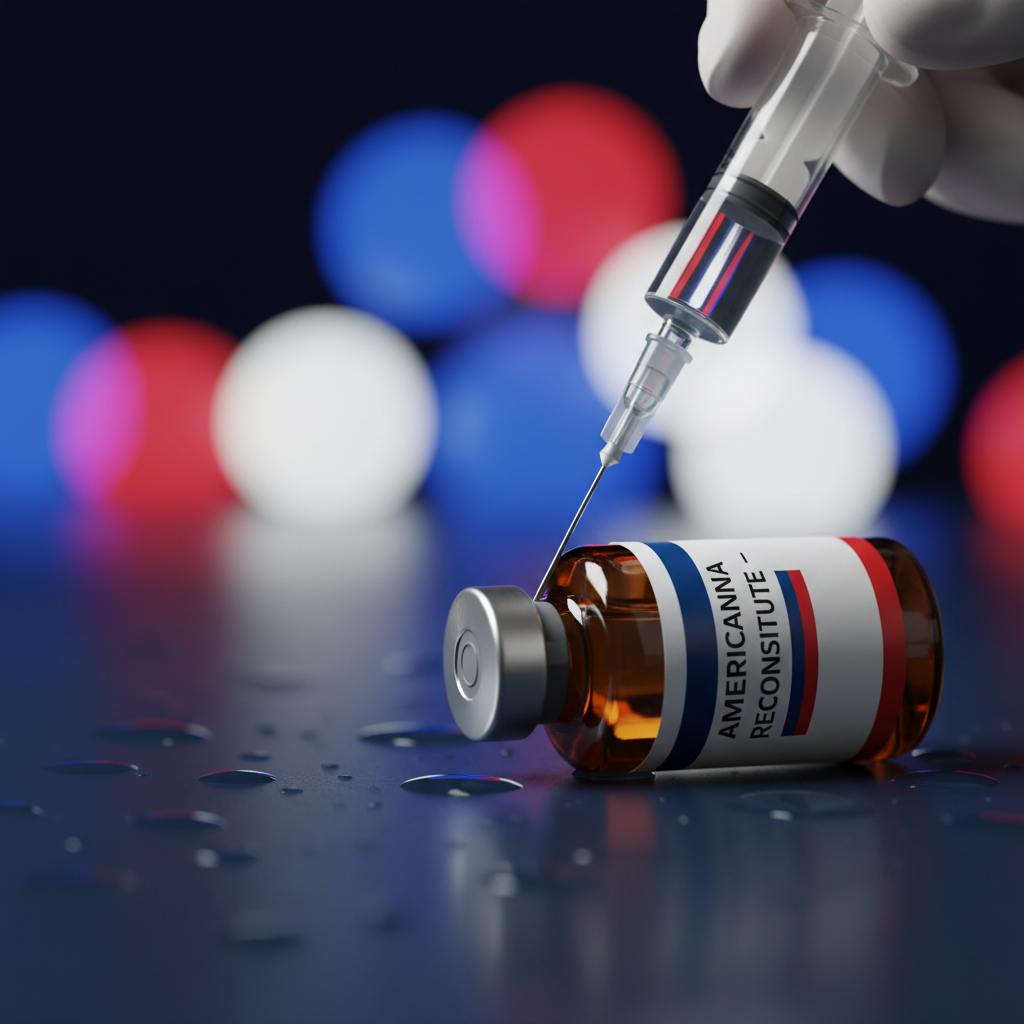
How to Reconstitute Peptides: The Complete Researcher's Guide
Reconstituting a lyophilized peptide is one of the most fundamental steps in any research protocol. Done correctly, it preserves compound integrity and ensures your concentration math is accurate from the first draw to the last. Done incorrectly, it introduces variables that compromise your entire experiment.
This guide covers everything a researcher needs to know — from supplies to storage.
What Is Reconstitution?
Lyophilized (freeze-dried) peptides are shipped as a dry powder to maximize shelf life and stability. Before use, the powder must be dissolved in a sterile solvent to create a solution at a known concentration. This process is called reconstitution.
The most common solvent for research peptides is bacteriostatic water (BW) — sterile water containing 0.9% benzyl alcohol, which inhibits microbial growth and extends the usable life of the reconstituted solution.
What You Need
Before you begin, gather the following:
- Lyophilized peptide vial (e.g., 5 mg BPC-157)
- Bacteriostatic water (sterile, 0.9% benzyl alcohol)
- Insulin syringe (100-unit / 1 mL)
- Alcohol swabs
- Clean, low-traffic workspace
Step-by-Step Reconstitution
1. Calculate Your Target Concentration
Before adding any solvent, decide on your working concentration. This determines how much bacteriostatic water to add and what volume you'll draw for each dose.
Example: 5 mg peptide vial, target dose of 250 mcg per use.
- Add 2 mL bacteriostatic water → concentration = 2,500 mcg/mL
- Each 250 mcg dose = 0.10 mL = 10 units on a 100-unit insulin syringe
Use a reconstitution calculator to verify your math before touching the vial. Manual errors at this stage compound through every subsequent dose.
2. Prepare Your Workspace
Wipe all surfaces with 70% isopropyl alcohol. Wash hands thoroughly. Minimize air movement — open windows and fans introduce particulates.
3. Swab All Vial Tops
Clean the rubber septum of both the peptide vial and the bacteriostatic water vial with a fresh alcohol swab. Allow to air-dry for 10–15 seconds before inserting any needle.
4. Draw the Bacteriostatic Water
Using your insulin syringe, draw the calculated volume of bacteriostatic water (e.g., 2 mL requires two full 1 mL syringes, or a larger syringe if available).
5. Inject Slowly — Aim for the Glass Wall
Insert the needle into the peptide vial and inject the bacteriostatic water slowly down the side of the vial, not directly onto the powder. Direct injection can denature sensitive peptide bonds.
6. Swirl, Don't Shake
Gently swirl the vial in a circular motion until the powder is fully dissolved. The solution should be clear. Never shake — agitation creates bubbles and can degrade the compound.
7. Inspect the Solution
Hold the vial up to light. The solution should be clear and colorless (some peptides have a slight yellow tint — this is normal). Cloudiness, particulates, or unusual color may indicate contamination or degradation.
Calculating Your Draw Volume
Once reconstituted, every dose requires accurate volume calculation:
Draw Volume (mL) = Desired Dose (mcg) ÷ Concentration (mcg/mL)
For a 100-unit insulin syringe (1 mL total): Syringe Units = Draw Volume (mL) × 100
These calculations are straightforward but error-prone when done manually under lab conditions. A dedicated peptide reconstitution calculator eliminates the arithmetic and reduces the risk of dosing errors.
Storage After Reconstitution
- Store reconstituted peptides at 2–8°C (refrigerated)
- Keep away from light — use amber vials or wrap in foil
- Most reconstituted peptides remain stable for 2–4 weeks refrigerated with bacteriostatic water
- For longer storage, re-lyophilize or freeze at -20°C in small aliquots
- Never freeze-thaw repeatedly — aliquot before freezing
Common Mistakes to Avoid
Using plain sterile water instead of bacteriostatic water. Sterile water has no preservative — reconstituted solutions degrade within 24–48 hours and risk contamination.
Injecting directly onto the powder. Always aim for the glass wall to minimize mechanical stress on the peptide.
Shaking the vial. Swirl only. Shaking introduces air and mechanical forces that can break peptide bonds.
Skipping the concentration calculation. Eyeballing volumes is not research — it's guesswork. Calculate before you draw.
Storing at room temperature. Even with bacteriostatic water, room-temperature storage accelerates degradation. Refrigerate immediately after reconstitution.
Presets for Common Research Peptides
Different peptides have different typical vial sizes and working concentrations. Here are common starting points:
| Peptide | Vial Size | BW Volume | Concentration |
|---|---|---|---|
| BPC-157 | 5 mg | 2 mL | 2,500 mcg/mL |
| TB-500 | 5 mg | 2 mL | 2,500 mcg/mL |
| Ipamorelin | 2 mg | 2 mL | 1,000 mcg/mL |
| CJC-1295 | 2 mg | 2 mL | 1,000 mcg/mL |
| Selank | 5 mg | 2 mL | 2,500 mcg/mL |
| Semax | 5 mg | 2 mL | 2,500 mcg/mL |
These are starting points — adjust based on your specific protocol and desired dose volume.
Accurate reconstitution starts with accurate math. Use the free peptide reconstitution calculator at refusetofade to verify your concentration, draw volume, and syringe units before every experiment.